The Glenbuchat Image Library
No: 2563 Contributor: No Contributor Year: 2024
20 Sir Charles Forbes 3rd Baronet of Newe


Charles Forbes 3rd Baronet Forbes of Newe 1803–1877
If a larger view required click on the ‘view large version’ link at the bottom of the page.
Click to see the album of Treasures of Castle Newe
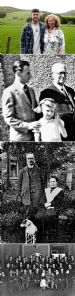
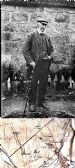
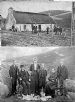
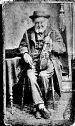
The photos above show:
1 On the left John Forbes elder brother and on the right the younger Charles Forbes
2 Charles Forbes
3 Charles Forbes as Cornet in the 17th Lancers in 1825
4 The 17th lancers in Camp c 1895
5 Painting of Sir Charles ‘relaxing while painting’ in 1866
More information about the picture of Charles Forbes in the 17th Lancers
From 74 Army Historical Research and others
Cornet Charles Forbes, 17th Lancers. C. 1825
By Major A. Mck. Annand
For many years. gradually becoming ever more discoloured, with the canvas buckling and the paint starting to flake away owing to the heat of an old Stove beneath it, there hung in the Lonach Hall, Strathdon, an interesting portrait by John James Masquerier of Cornet Charles Forbes (later 3rd Baronet of Newe] in the uniform of an officer of the 17th Lancers.
This portrait, having been placed in the hands of the restorer as recently as January, 1962, by its present owner, Colonel Sir John Forbes of Newe, D.S.O. (6th Baronet and great-grandson of Sir Charles), it has now regained its original freshness and has been removed for safer keeping to Allargue, Corgarff. the home of Sir John, by whose kind permission we are now able to reproduce it
Charles Forbes was born in Bombay in 1803, his father, Sir Charles Forbes of Newe (1st Baronet), being head of the great Bombay house of Forbes & Co., but when very young was sent home and never returned to India.
He was educated at Harrow and on 23rd June, 1825, was commissioned as a Cornet in the 17th Lancers. in which regiment he was promoted to Lieutenant on 15th August 1826, and to Captain on 21st December, 1832, going on half pay on 7th August, I835.
Masquerier’ s portrait of Forbes is neither signed nor dated, but the catalogue of the Royal Academy Exhibition of 1826 records that exhibit No. 257 was at "Portrait of an Officer in the 17th Lancers" by this artist. As no other portrait of an officer of the 17th is known to have been painted by Masquerier, the probability is that the painting at Allargue is the exhibit of 1826. If this is the case, it must have been painted some time alter 23rd June, 1825, when Forbes received his cornetcy and probably between July I825, and March I826 whilst the 17th Lancers were stationed in Brighton and Chichester: Masquerier was working in Brighton at that time.
Masquerier. born in Chelsea, on 23rd Oct 1778, of French extraction, was married into a branch oi the Forbes family, being the Second husband of Rachel Forbes-Mitchell, of Thainstone. He painted several portraits of Forbeses and Forbes-Mitchells, including members of the Newe branch.
He painted many military portraits in this country, and those of Marshal Lannes and General Duroc. Other military paintings include Napoleon reviewing the Consular Guard and distributing medals at Tilsit. He died at Brighton on 13th March, 1355. “Masquerier and his Circle." by R. ‘R. M. See, 1922.
The painting is of Charles Forbes who purchased the rank of Cornet in the 17th in 1825. The regiment was one of the swankiest in the British Army at the time, and was nicknamed Bingham's Dandies after their colonel George Bingham, a wealthy young nobleman who later became Lord Lucan. Bingham lavished enormous amounts of money on his regiment. The officer's uniform was dark blue with white facings, i.e. the collar, cuffs and plastron on his chest are white, so too is the upper part of his Czapka (lance-cap). The lace and braid are nearly all silver, i.e. the embroidery on his collar and cuffs, the epaulettes, the aiguilette (pronounced egglet by modern day household cavalrymen) suspended from his left shoulder and draped across his chest, the buttons and trouser stripe are silver. Around his waist, however is a girdle of three gold lace stripes with stripes of crimson silk between. The belts are of silver lace with white silk stripes down the centre. The pouch belt which is the hallmark of a cavalryman always goes round the chest from the left shoulder. It is ornamented on the front with silver pickers and chains (the pickers were originally used to clean out an aperture on the firing mechanism of the wearer's pistol, but became ornamental over the years). The pouch itself, round the back, was a small black leather box containing cartridges, ornamented with a silver flap and with a gilt royal cypher on it. The belt round his waist has slings attached to his sword, which is the Marmaduke style, and his elaborately embroidered sabretache (shown here).
Forbes's horse is expensively decorated with a harness covered in gilt scales with silver deaths head mottoes on the martingale on the horse’s chest and on the cross chains on the horse's nose. The most distinctive features are the red plumes of horsehair hanging in threes from various parts of the harness. The shabraque is only partly visible and is dark blue with white vandykes and silver lace and embroidered Georgian cypher (also shown in next picture).
His helmet, or Czapka is mostly white and silver with the exception of a gilt 'sunray' on the front on which are fixed a silver motto and crown. There are gold caplines wound round the waist of the cap. They hang down the back and go under the left arm, attaching to a hook sewn on the front of the jacket. Other portraits show the caplines ending in gold 'acorns' which hang in front and flap about as the officer canters along.
In 1854 during the Crimean war, during a Russian attack on the British base at Balaklava, a misunderstood order led the Light Brigade to charge down the mile-long Valley of Death at a line of Russian cannons. The 17th Lancers rode in the front line.
 View Large Version
Picture added on 25 January 2024 at 16:42
This picture is in the following groups
people
people
people