The Glenbuchat Image Library
No: 2459 Contributor: No Contributor Year: 2022
135 The Davidsons of Newseat


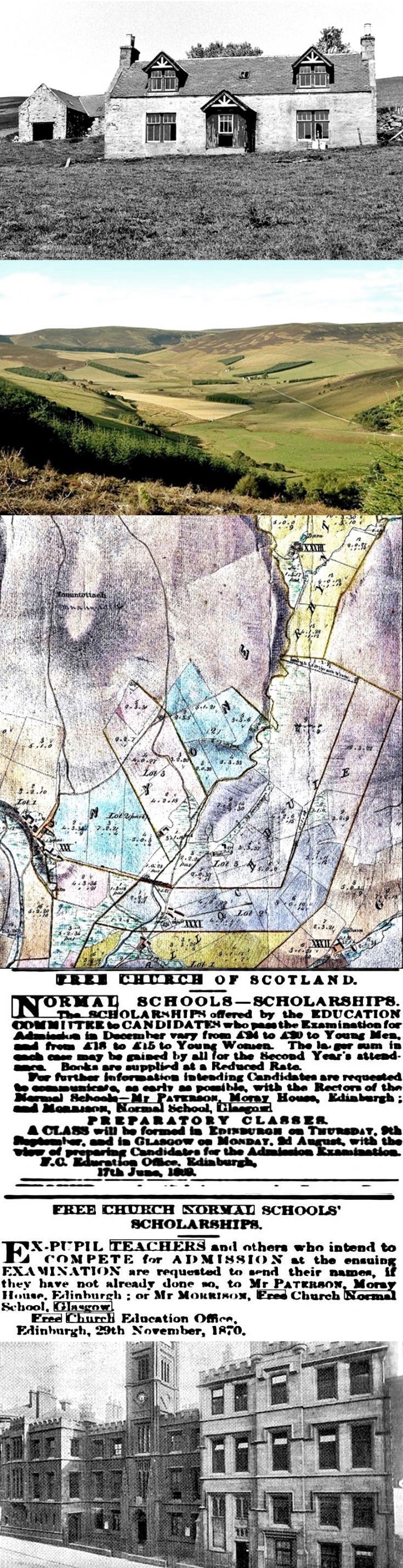
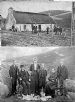
Image 1. Newseat farm house (picture c1980) dates from the time of J. W. Barclays improvements to the glen - after 1901.
Image 2 Upper Glenbuchat c 2000. At a height of around1200 ft., the lands and buildings of Ballochduie Croft (front, centre) with Newseat Croft (rear, centre) in the distance. Now permanent pasture with blocks of conifer tree plantations, and with grouse moors on the hill tops.
Image 3Glenbuchat Estate Map - 1864 showing the lands of Ballochduie XXX1subdivided into three crofts (Lots 1 - 3) and the farms of Sluggie XXXll and Rhyntaing. XXXlll (See text for details)
Image 4. Adverts placed in the press for candidates applying for teacher training at the Free Church Normal Schools in Edinburgh and Glasgow (Perthshire Advertiser 1st Dec.1870 and the Elgin Couriant
Image 5. Adverts placed in the press for candidates applying for teacher training at the Free Church Normal Schools in Edinburgh and Glasgow (Perthshire Advertiser 1st Dec.1870 and the Elgin Couriant 23rd June 1869).
Image 6. The Free Church Normal School, Cowcaddens, Glasgow c1907 (Lost Glasgow). Opened in 1845, the students called it 'Stow College' after the pioneering educationalist and leading Free Kirk dissenter - David Stow.
The Davidsons' of Newseat Letters
This article tells the story of two of the Davidson brothers William and James who left the family croft of Newseat to train as teachers and through the medium, of their letters describes their life in Glasgow and the tragic death of William as foreseen by James Barclay the Laird in his comments on young men leaving the glen
For the last two or three generations the more enterprising and gifted of the young men and women have left the Glen, compelled to seek a field for their talents that by their race, by that spirit of enterprise and adventure that scatters the lowland Scot over the whole surface of the globe, and brings him as Macaulay says, to the top wherever he may east his lot as surely as cream rises to the surface of milk. Some have greatly distinguished themselves, one might say in every walk of life, and have conferred far greater benefits on the nation than if they had remained at home to till crops, that even if rent free would barely with great labour and anxiety yield sufficient to bring up a family in decent comfort. The exodus is stimulated by the periodic return on holiday, with soft hands and smart clothes, of those who have already gone. and ardent use is not discouraged by the fate of numerous bright, healthy fellows, who have left their highland glens and returned in a few years to die of consumption contracted in the crowded shops or in the noisome alleys of our great towns. Some may rashly assume that the remaining inhabitants are survivors of the unfittest, but nature continuously renews itself by “a simple life" in the open air, and the glen proudly maintains that the rising generation shows no falling off either of physical or intellectual vigour, for our thirty-five odd years, compare favourably with others, and recently one of its sons distinguished himself by carrying off to the Aberdeen University in one year the gold medal in soldiery and in other the same distinction in medicine. The young men and women are much attached to the Glen, but they seem more influenced to remain by filo affection than by any other motive. Young men stay to work hauling to keep a home for a widowed mother, and daughter return to assist parents in household duties, much more irksome and distasteful than what they leave. Parents make great sacrifices to send out their sons and daughters fully equipped to play a part in the outside world, and are proud to see them occupy the higher station in life than themselves. That indeed is one of the great objects of their life, and these characteristics are more or less common to the crofters of small farmers on the east coast of Scotland.
The Davidsons of Newseat.
(See family history below)
In 1841 James Davidson was tenant farmer of 12 arable acres with 28 acres pasture at Newseat Croft in the upper part of the glen (1841 Census). The croft also shared hill grazing rights with Ballochduie Croft, Rhyntaing and Sluggie Farms, on the Hill of Allt Sowan and the Crespet Hill. By 1864 the croft had increased in size to around 22 arable acres, with the same area as pasture (estate map image 3).
(Newseat Croft (XXX11see image 3) was originally part of the old, multi-tenant, run rig township of Ballochduie which was divided up into three, approximately equal sized, single tenant 'Lots’ in Glenbuchat Estates reorganisation in the early years of the 19th century. The clachan of Ballochduie (XXX111) may have covered everything to the east of the Leadensider Burn and included the farms of Sluggie (XXX11) and Ryntaing (XXX111). The large clachan of Badenyon (XXX), with its medieval stronghold, the Haltoun de Glenbuchart (Exchequer Rolls 1438), was to the west side of the burn.
The lands of Ballochduie appear to have gone through a second subdivision, to form the enlarged Newseat and the two Ballochduie crofts of the 1864 map - Lots 1, 2 and 3 (see image 3). The linear boundaries (yellow lines) across the face of the landscape of the estate map - were superimposed on an existing, post agricultural improvement, blocked geometric field system, with little regard for the field layout. This second sub-division of Ballochduie, to form the three crofts, will have taken place after the initial phase of the estate’s improvements of the early19th century. The Lots at Badenyon, by comparison, did not undergo this second division, and the field boundaries follow the 'laid out by design pattern' of the estates initial reorganisation.)
James Davidson and his wife, Helen Cordiner of Towie, raised their six children, James, Alex, Mary, William, John and Helen on the family croft. In the early1870's two of the sons, William followed later by James, won scholarships to train as teachers at The Glasgow Free Church [Teacher] Training College ('The Free Church Normal') in the Cowcaddens district of the city. We don’t have records of their early progress from school pupils in the glen in the1860's, to student teachers at college in the early 1870's, but we can speculate that they took a common route for that time. Following on from elementary school in the glen (besides small private adventure schools, there were four by 1870 - all recently built - The Church Of Scotland parochial school (1868), the Scottish SPCK subsidised, Balloch School (1868), the Netherton Free Church Male School at Dulax (c1866) and the Free Church Female School at Belnacraig (c1866)).
They may have worked as pupil teachers at the F. C. male school at Dulax, serving a five-year apprenticeship, assisting the hard-pressed teacher. With mentoring and coaching from the schoolmaster or the minister, a 'cliver loon' could move on to teacher training college and a professional qualification as a Certificated Teacher. (The University of Strathclyde, Archives and Special Collections, Ref.GB 249 FCTC has the records of the Glasgow F. C. Normal college from 1845 -1998, which may give more details of the two students early progress).
The Free Church
The Free Church of Scotland recruited many of its future ministers and teachers from the sons (and in the case of teaching - daughters) of farmers, labourers and tradesmen etc. They were its main supporters in the countryside after the bitter division which split the established Church of Scotland - ‘The Disruption' of 1843. The established Church kept all the buildings, properties and endowments etc. and supporters of the evangelical, break away Free Church (about 450 ministers out of 1,200) and parish schoolteachers, were required to relinquish their posts and their accommodation - manses, school houses. The newly formed Free Kirk (about a third of the laity) began a massive national fund raising and building programme to establish its own churches, manses and schools in as many parishes as possible, in parallel to those of the 'Auld Kirk'. Free Church teacher training colleges were built in Glasgow and in Edinburgh, to give a dual system with the established church.
'The seceders created a voluntary fund of over £400,000 to build 700 new churches; 400 manses (residences for the ministers) were erected at a cost of £250,000; and an equal or larger amount was expended on the building of 500 parochial schools' (Wikipedia).
The Glenbuchat congregation of the combined Free Church of Strathdon and Glenbuchat parish, was comparatively fortunate in having their laird, the Earl of Fife, sympathetic to their wish for freedom of worship. By 1861 he had granted sites in the glen, and by 1865 the Free Kirk congregation of the combined parishes had a new church and school house for the female school teacher at Belnacraig, Glenbuchat (1865 Valuation Roll). A manse and separate male and female schools were to follow. By comparison, the Free Kirk congregation in neighboring Strathdon had a difficult time from hostile landed proprietors.
A history of the Free Church recorded –
'After great difficulty and much discouragement, a site was obtained at Balnacraig in 1861, and church and manse were erected. In that year the proprietor permitted the erection of a wooden structure for the section of the congregation at Strathdon.' 'Not till 1890 was a site granted, and a church erected at Strathdon. The congregation encountered great opposition. Those who joined the Free Church were persecuted, and many left the district. The population steadily declined.' (Ewing’s Annals, List of Congregations: Volume 2).
Student teachers from poorer families required financial support for their training. At the age of 18 plus, those pupil teachers who wished to remain in the profession, and other candidates, could sit the
government inspectors supervised, admission exam. Preparatory Classes were held in July or August for candidates taking the exam in December. State funded scholarships were awarded to candidates who passed. Former pupil teachers were given extra credits over ordinary candidates, and went to those
'who appeared most proficient in their studies and skillful in the art of teaching, and concerning whose character and zeal for the office of Teacher, the Inspector is able to give the most favorable report.'
Free Church Normal teacher training, in Edinburgh or Glasgow, was a two-year course. The college year ran from January to December, with a holiday break of two months in the summer. Students attended the 'Normal School' for 5 and a half days a week (with Sunday as the day of worship) and were expected to study on their own in the evenings. The range of subjects covered was formidable, and for men students included: religious knowledge, church history, grammar, reading, penmanship, geography, history, music, logarithmic arithmetic, mathematics, arithmetic, algebra, science, English literature, Latin, Gaelic, school management and practical teaching. Trainee Teachers were assessed by examination in the set subjects, and by government inspectors in their skills in teaching. If successful, they were awarded The Government Certificate of Merit at the end of the second year. (Following the Education Act (Scotland) 1872, and the secularisation of education, the Government Inspectors ceased to examine students on religious instruction, and the religious institution - Free or Established Church, continued with this role). The scholarship awards of £20 for the first year and £24 the second year fell short of the living expenses needed to maintain them through their teacher training, and their family was expected to provide the remainder. With two sons to support at college, and a third, Alex, married and living and working in Glasgow, an almost unbearable strain would have been placed on an already meager income from Newseat Croft, so heavily dependent on family labour to operate.
The Davidson Letters
In proportion to the population, no parish has sent forth more sons who have taken high positions in education, medical ecclesiastical, military and commercial circles. whether this has arisen from the superiority of the grounding imparted at these schools, the determined character of its people - which has, doubtless, been fostered by the free natural beauties of the district - or from a mixture of both is uncertain.
At the high point of the Glenbuchat’s population around 1871, 578 people were directly or indirectly earning a living in agriculture from the Glens approximate 9000 arable and remaining 9866 acres of hill grazing, grouse moor and peat moss. Families in general were large by today’s standards and the pressure o+ an increasing population on a email area of cultivable land meant a meagre living for most people. Apart from one son, usually the eldest, who could expect to succeed his Father as tenant of the family holding, and daughters who married locally, rest of the Glens young people were Forced to find wore and a way of life beyond the parish boundary and local area. Daughters found employment in shops and factories or in domestic service. Sons’ fee’d as farm servants and entered a nomadic way of life, moving from farm to farm at six monthly intervals until they could marry and settle in a cotter house or with luck gain a toot on the farming ladder by taking on the tenancy of a croft or small farm. Others Found work in the variety of trades and service jobs in the rapidly expanding industrial and commercial centres of the towns and cities, while some joined the army or emigrated the majority went willingly, with the expectation of a better life. Away from the daily grind and endless labour of the family farm. But the reality could be the exchange of a comparatively comfortable and healthy way of life for the poverty, squalor and disease of a city slum.
For a gifted few, education on beyond the elementary parish school, at co1lege or university opened doors to high status jobs such as those in the professions. Parents scrimped and saved and the whole family was expected to make sacrifices to send an able scholar on to higher education and whose subsequent achievements brought quiet pride to the family and wider community. For those who could not afford the expense of supporting the education of a son or daughter, grants in the form of bursaries and scholarships provided a last hope , with coaching and encouragement from the schoolmaster and minister, a ‘cliver loon’ could take this road
The experience of one of the Glen’s families I sending two sons on to higher education in the early 1870’s has survived in the form of short letters sent home.
James Davidson was tenant of Newseat, a croft in the upper part of the Glen of 10 arable acre and 29 acres of rough pasture. On this poor holding he and his wife, Helen Cordiner of Towie, raised their 6 children, James, Alex, Mary, William, John, and Helen. Two of the boys William followed later by James won scholarships to attend the Free Church Normal School in the Cowcaddens district of Glasgow to train as teacher. The Free Kirk encouraged and drew many of its future ministers and teachers from the sons of small farmers and crofters, who were its main supporters in the countrywide after the Disruption of 1843. The boys had very probably worked as pupil teachers, serving a five-year apprenticeship assisting the hard-pressed teacher at the Free Church school at Dulax. The award £24 to James and £20 to William in 1872 fell far short of sufficient to support them and their family was expected to find the rest. This must have put an almost intolerable strain on an already meagre income from the croft.
The Letters Home
A few of the letters sent home to Newseat from the two brothers at the Free Church Normal in Glasgow, dating from the early 1870's, have been kept in the Davidson family and are reproduced here.
The first letter, to one of his sisters, is from William Davidson (who likely attended the Preparatory Classes in July 1870 in preparation for sitting the admission exam in December, with entrance to the college in January 1871). It conveys the excitement of his journey south, and includes a little gossip -
8 Nicholas St. Glasgow July 4 1870.
Dear sister,
I have arrived here all right, baggage and everything. I have got a nice room from Alex; it is about 3/4 of a mile from the school. I called on the Rector today he is a very nice civil gentleman and he advised me to stop until Monday and get a good view of Glasgow before I go to School. So, I enter the School on Monday first. Now, I may give you an account of some of my travels from Abdn. I got acquaint with a young lady and gentleman from the north. You have heard of the lady yourself although you never saw her. It was she who married the Parson of Boharm (Moray) when he was on his death bed and for which she receives £80 a year. She is a very nice girl indeed; she put herself to the trouble of showing me a great part of Edinburgh. Indeed, we were through all the Castle saw the Regalia of Scotland, Mons Meg and a great many things to tedious to mention. She also brought us to the House of Parliament and to the very house that J. Knox lived in and the Church that he preached in. We stayed in there more than 3 hours and the afore-said gentleman came right through with us to Glasgow and has given me an invitation to his house.
I 'm not in the least tired just now and my health is good. Hoping father is better and not grieving himself about my departure, and the rest well. Alex has got a nice wife and a good one too.
Your afft. Brother, William.
Shortage of money was a constant source of worry and the following extract from an undated letter, from William to his mother, is typical of many pleas for help -
My chief purpose is to tell you that my money is again done and if you cannot give me more I'll be undone. However, things are looking up. I am led to believe that the Scholarships are paid in the month of March. So you can send me a little more money, and I pledge my honorable word to return it again when I get my own. So d'yee see, we'll have the overturn of the money, and that’s something.'
The students went home to the glen for the summer holidays - from early June to early August. They became involved with the work of the croft, and when back at college, their interest in the farm continued.
William to his mother –
F. C. Normal, Glasgow. 6th June 1872
Dear Mother, As you will not write any of us here, we are going to Glenbucket to see how busy you are! We arrive at Gartly Station on Saturday the 8th at 2.40 P.M. If you get this in time perhaps you will come and meet us.
Yours truly and afftly. William.
William to his mother (undated) –
72 Cambridge Street, Glasgow
Dear Mama,
I received your letter all safe. I never expected you would have sent us more money, for I was afraid that you would not have any to send, but it came in excellent time and fitted our turn well. I trust we will be able to send it home again very soon, perhaps next week. I am a good deal better now, my late headache is almost away, but I am very weak yet. I am just newly in from my walk and I feel rather weary. I was walking in the West End Park. It is a nice place at all seasons of the year and is only 3/4 of a mile from our lodgings. I have not done any work this week but I expect to begin again on Monday. Alex was over and carried off his butter and cheese quite triumphantly. I am afraid you have had a bad harvest this year, and much difficulty in bringing it to the cornyard. How did the peas ripe, and did you have plenty of straw? You never told me what quantity of hay you have this year but I mind it was rather poor when I was at home. I must now finish as I am getting tired. James is quite well. Hoping you are all in good health at home.
Dear 'Ma Yours Willie
William to his younger brother John –
Augt-14 '72
Dear Brother, I received your letter to day all safe. You might I think as well put the fifth postage (stamp) inside the letter, or kept it to yourself as I think four would have been quite sufficient. I am glad you are all well at home. I suppose Mary and Ellen will by this time have got to Buckie you didn't tell me the method she took of traveling but perhaps she will do that when she writes herself, which will perhaps be "this day six months". We have been exceedingly busy since we came here and I have no doubt it will be so until the end of the season. We have to sit up late and often need to rise to our tasks in the morning. However, some nights are more easy and I sometimes manage to get out for a short walk. James is quite well, he is playing on the fiddle just now, which would annoy me very much if I were studying, only I could go to our back room. Alex was here on Monday and dined with us. He and Jessie are both well and so is baby, who is turned to be a pretty big boy. How would you like to have one. In course of time, he would be of some service to you as he could herd. I have no news' of any importance to give you at this time except that I must buy a new hat and that will cost money. What you sent will pay our lodgings for a fortnight but where will we get more. That is a problem I cannot solve. You might have given me more news of the turnips, crops, peats etc. I shall not write more as it is dinner time and I am hungry. My cough is not better but it is only bad at evenings and mornings. Hoping yours is the same. Trusting that you are all well at home and, that you will write soon.
Dear brother yours afftly. William
William to his mother –
47 Cambridge St. Glasgow (Mrs Ferimer) Augt. 21 1872.
Dear Mother, — though I have not received any letters since I wrote I am under the necessity of asking more money. This is our day for paying our weekly bill and I expect to be two shillings short of the amount. Can you send any soon? I am absent from school today on account of bad health. This morning my throat was so sore that I could not swallow any of my breakfast. I am sick occasionally. The complaint is nothing more than Scotch Cholera but this is bad enough. James is a great deal worse than I am. This is the third day which he has been confined to bed only rising to get it made before night. Our doctor has been seeing him twice and will be here today. I will not write more as I have sent you plenty of bad news which might be sufficient for a week. Mary has not written yet. I was at Alex's last night, they are all quite well, he could not even lend me 2/- as he paid his rent last week. I expect to get better soon. I hope you are all well at home, and that you will write by return of post.
Dear mother yours afftly. William
James to his mother –
47 Cambridge St. Glasgow 26 Augt. 1872
My dear Mother, this is the first letter I have written since the holidays and I am sorry I have not better news to communicate to you. I suppose when William wrote you last, he mentioned that we were both ill. I am now much better and able to be out of bed all day since Friday. I lay three days and had the doctor attending me daily and lived upon nothing but beef-tea, arrow-root and wine and a great deal of medicine. I am now so much recovered that I would have been able to attend my classes to-day had it not been such a bad and wet day. William took to bed on Thursday. The doctor has been calling daily since. He says it is Scarlet Fever but very slight. He thought the crisis of the fever was over yesterday. William does not look very ill at all yet it will be sometime before he can be well. The servant in the house is an elderly married woman and is William’s nurse and as far as that goes he is well attended. At first the Dr. proposed sending him to the Infirmary but he was unwilling to go. Then it was agreed to let him remain in the house and I was sent to sleep in another room. We in town are not at all so frightened for infection as you are in the country. I often go in to Williams bedside to see him. Still there is no certainty but one may catch fever from another. The medicine and also the food both of us are using is very expensive. The money is nearly all done and the bill for last week not fully settled. The landlady is poor in purse and not able to give us more than a weeks living in advance, so of course you will need to try to do something in that way, for it will be six weeks before we get our money from the Rector. The servant has undertaken to become Wms. nurse free, and a great deal of trouble it is to her besides the danger. I am keeping her in whisky as that is all the recompense she seeks. Beef-tea is 6d a cupful and medicine costs about a shilling a day. Oranges are 2d each and there are many other things that a sick person must have. I believe he is better attended than if he were at home but the expense is great. It was not fever I had.
Please write soon, I am ever your affct. son James Davidson
James to his mother –
47 Cambridge Street Glasgow Thursday 29 Augt 1872
Dear Mother, The Doctor called last night and finds that the fever is not over. He says William must have a constant nurse else there will be a good deal of danger to him. Of course, I am not able to pay 25/- or 30/- per week for a nurse and one cannot be got for less. I suggested to the Doctor that I would undertake the nursing of him but he would not consent to that at all. He says were I to nurse him in all probability I would take the fever myself and require to be nursed instead of nursing. The Doctor says it will need to be an old person. I confess I am quite at a loss. Not that I am any afraid of of the fever but were I too to catch it, it would only make matters worse. I see no other way than that you must come. I mentioned this to the Doctor today and he was well pleased with the proposal and thinks there would be little danger of you catching the fever. I know not what you may think of such a proposal, you may think it a long way to come to Glasgow but it is urgent necessity that makes me ask you. I must tell you the landlady is alarmed for William’s safety though I see nothing to be seriously alarmed at. Still, I do not like the responsibility of such a charge. Were anything to happen to him you might wish and I might wish that you had seen him.
Now you must not get into a bustle or state of excitement either about William or the journey to Glasgow. If you leave the Bridge of Bucket with the Post (Mail coach to Gartly Station) on Saturday morning you could be here in all good time. If you cannot come write and say what I am to do. William thinks you will not be able to come and says you might send Mrs Dow (Peatfold). ( I say this just because he bade me.) He rested well last night and today the Dr. says the fever is somewhat abated though he is weaker himself. He has been smoking twice today and speaks very sensibly though he wanders a little. Alex called today and he is pleased with the proposal of your coming to Glasgow. If any change takes place either for the better or worse, I will write tomorrow.
Sincerely yours James Davidson
P.S. Never think of sending sister Mary.
POST OFFICE TELEGRAPHS
Glasgow 9.15 - Rhynie 10.00 au: 30 1872
from: james davidson glasgow
to: james garden shoemaker rhynie
‘go to newseat glenbucket and send mrs davidson to glasgow immediately her son william is worse.’
James to his brother John (on black edged note paper) –
47 Cambridge St. Glasgow 1st Septr. 1872
My dear brother,
By this time, you will be expecting the worst. Our dear brother is no more. He died yesterday morning at 8 o' clock. I would have written you sooner but waited till mother should arrive. She arrived all safe last night but the train was an hour and a half late and that kept me from writing with Saturday’s mail. There is now no cause to be too much grieved for our departed William. He died gently and suffered with remarkable patience. He never once complained nor expressed any regret at dying. He was quite sensible to the last and told me the day before he died how good it was for one to have his peace made up before he came to die. A few minutes before he died, I asked if he was willing to die. He said "quite willing". I then said " poor Willie, I doubt your mother will not see you". He replied " well it does not matter much; my whole hope is in God". I then asked him was there anything in the world he was unwilling to give up. He said "nothing". Then I took and rubbed his lips with a feather and some lotion, he said "thank you" and nodded his head. Then his breathing became more slow and gradually ceased. I lifted up his hand to feel his pulse but it was gone. A few minutes more and the face and lips became white. The spirit had departed!
We have got the arrangements for the funeral nearly settled except the place where he is to be buried. We have the ground to buy but can do that tomorrow morning. Mother is quite well and is quite resigned. We are to keep her here for a short time and I hope you and father will not miss her. I will be writing to you often and telling news from us. Write some and tell how you all are. I wrote to Rhvnie, to Lochrie, and to Foggymill telling them of Williams death. Please inform them early at Netherton and Peatfold. I am quite well at present.
I am ever your loving brother James Davidson.
Addendum
John Davidson and his sister Helen remained in the glen to work the on-the family croft. Sister Mary married John Michie from the neighboring farm of The Sluggie in 1877. They had six children, and the youngest, Charles Michie, after attending the Balloch School, went on to train as a pharmacist, and in 1928 founded the chain of north east pharmacist shops we see in the area today. John took over the tenancy of Newseat when his father, James Davidson (senior), died at the age of 86 in 1891. In 1896 John married Jessie Weir from Enzie, Banff. In 1908, at the age of 58, he was tragically killed in an accident at Sunnybrae. When driving home from the Glenbuchat smiddy, his horse bolted and he was thrown from his cart (Registers of Deaths, Glenbuchat 1908). His widow Jessie, with three young children - Mary, George and John, continued farming the croft at Newseat, with the help of Helen and hired farm labour (Census 1911).
Details about the death of John Davidson are shown in the following newspaper article.
Dundee Evening Telegraph - Thursday 13 August 1908
GLENBUCHAT FARMER KILLED.
A distressing accident, resulting in the death of Mr. John Davidson, farmer, Newseat, Glenbuchat, occurred at Glenbuchat. Davidson was driving horse and cart along the road, which runs the Glen from the Donside Road, and, when in the vicinity of the merchant's shop at Sunnybrae, the horse bolted. In his endeavor to stop the runaway, Mr. Davidson, who was seated in front of the cart, overbalanced himself and fell down between the horse and cart- It was found that he was quite unconscious, and had been severely kicked the horse in the abdomen. this state was carried into the house of Mr. Daniel Cameron, Sunnybrae, and Dr Howie, Strathdon, was immediately sent for. It was soon apparent, however, that his condition was hopeless, and he died about 4.30, three hours the accident took place. It should be mentioned that the horse ran for about, two miles after the accident occurred, but stopped ultimately without doing any further damage. Davidson was a former member of the Glenbuchat School Board. The deepest sympathy felt for his widow and three children.
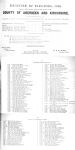
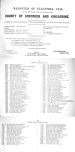
Previously John Davidson had been involved in a significant legal case about irregularities caused by others in his attempt to be elected to the Glenbucket Parochial School Board.
Aberdeen Evening Express - Wednesday 30 May 1888
GLENBUCKET SCHOOL BOARD. PETITION TO HAVE ELECTION DECLARED ILLEGAL
In Aberdeen Sheriff Court to-day, before Sheriff Wilson, the petition the instance of John Davidson, farmer's son, Newseat; Alexander Brodie. farm servant, Balnacraig; and John Ross, shoemaker and postmaster, Bridge of Bucket, in the parish of Glenbucket, against the returning officer of the parish, came up for proof. The petitioners seek get the election of the present School Board declared illegal and void order that another election may take place. It stated that after the nomination papers were lodged and the nominations published terms of the Act the returning officer discovered that Mr. Davidson's nomination paper had not been signed by one bis nominator, and therefore decided that it was inept. effect of this decision of the returning officer was to render a poll unnecessary, and accordingly on the expiry of the time for taking a poll the returning officer declared the other five candidates elected to form the new Board. The Act imposes the duty on the returning officer to decide these matters, and declares that his decision shall be final. The contention the petitioner, however, is that the returning officer had already decided the matter by publishing the names. Mr. A. E. Smith, advocate, who appeared for the returning officer, raided the objection to-day, and the Sheriff had no jurisdiction to entertain this action, because unless special powers were conferred he had authority to decide cases of declarator, The Sheriff repealed the objection, and proof was led. The returning officer at the recent election, examined Mr. Milne, solicitor, stated that so far as observed Davidson nomination paper was the same as that of the others, and had it not been that it was challenged by some of the ratepayers would not have said that there was anything wrong with it. He acted to the best of his judgment, and good faith. John Davidson, pursuer, deponed that did not know anything about the signing of his nomination paper. Alexander an elector of the parish of Glenbucket. that took charge of the nomination some of the candidates at last School Board election, and he interested himself in Mr. Davidson's candidature. Shown Mr. Davidsons nomination paper said five signatures were adhibited in his presence. He signed the name of John Ross because had his authority to so, and quite common thing in the parish. In reply to Smith, advocate, stated that could not remember seeing Peter Murdock sign bis name. Brodie on being further cross-examined admitted that he signed Peter name in Davidson's bouse. also wrote some the other names of the nominators their presence. John Ross said he authorised Alexander Brodie to admit his name Davidson s nomination paper. Alter Mr. M had argued the case on behalf the pursuer, Mr. Smith said had no statement to make for the defender, the Sheriff intimated that he would consider the matter, and give his decision tomorrow at noon.
Aberdeen Press and Journal - Friday 01 June 1888
THE GLENBUCKET SCHOOL BOARD, ELECTION DECLARED INVALID.
In Aberdeen Sheriff Court, Sherriff Wilson gave judgment in the action at the instance of John Davidson, farmer’s son, Newseat, Glenbucket, and others, against the returning officer of that parish, craving that the recent School Board I election should be declared illegal and void owing to a certain irregularity. Sheriff Wilson in giving judgment is a question as to the validity of the election of the School Board for the parish of Glenbucket, and I have already given my opinion that if under the Act of Parliament it is competent for me to inquire into the validity of the election of any member of the Board, it is competent for me to inquire into the validity of the election of every one, and therefore that it is competent for me to deal with the question whether a whole Board has been duly elected. The question arises here under the following circumstances. It appears that at the proper t time-namely, fourteen days before the time fixed for the election-the nomination of the petitioner Davidson was banded in for the election. It further appears that at the proper time-that is to say, eleven days before the election-the nomination were duly sustained. It appears that that nomination bore to be signed by one of the petitioners, John Ross. Sometime before the election-apparently a few days before it came to the knowledge of the returning officer that there were suspicions whether John Ross had appended his own signature, and accordingly, upon the day before the election, the it returning officer made inquiry and discovered that John Ross's signature had not been placed there by himself, but had been placed on the nomination paper by another of the petitioners, Alex. Brodie. It further appears that Ross did not deny that the signature had been put there with his authority. When the returning officer discovered that the signature was not the genuine signature of Ross, he called together the members of the expiring Board and consulted with them, and after doing so came to the conclusion that the nomination of Davidson was invalid. Accordingly, upon the morning of the election, he announced that there would be no poll. There had been merely the requisite number with one in addition, and if the nomination of any one of them was invalid then there was only the requisite number left, and there was clearly no need for a poll. Now, in all that he did it appears to me that, the returning officer acted quite fairly and reasonably, and if the matter had been open, should have been very much inclined to have taken the same view of his duties as he did himself, but the matter is not open. There have been repeated decisions upon the point, and it seems to me expedient that upon a matter like this, which is a matter of practice, there should be uniformity of decision, and therefore I am not going to go against the decisions that have already been pronounced. The question arises upon the construction of section 9 of the regulations made by the Scotch Committee on Education for conducting elections Those regulations, by section, provide that nominations are to be given in not less than fourteen clear days before the day fixed for the election. Then section says after the nominations are given in, the returning officer shall decide whether any nomination is valid. and his decision shall be final. Section 10 provides that eleven clear days before the election the names, places of abode, and designations of the several candidates nominated shall be published by the returning officer. It says there under section 9 that the returning officer shall decide whether any nomination is valid, and his decision shall be final, and the question is whether he is bound, under those regulations, to make up his mind upon the validity of the nomination, and to give his decision within the three days that are allowed between the lodging of the nominations and the advertising of them. Now prima facie, that is the construction of the regulations, but it does not seem to me unreasonable to hold that there might be a question in the case of some of the signatures not being genuine, because the returning officer can hardly expect that anything it but genuine signatures are to be sent to him, and he could hardly be expected to go round the parish to inquire of every nominator whether he put his name there; and it may reasonably be said that it would be enough for him to give his decision upon that point when the question came to his notice. But that is not the construction which has been put upon the regulation. There have been three decisions of the Sheriff Courts upon the point. Sheriff Robertson. of Forfar, and Sheriff Hill, of Dingwall, both in 1885, held that the decision was given when the nominations were announced, and that, as it was then final, a no inquiry into the validity of the nominators could take place. The same decision was given by Sheriff Brand, of Ayr, in 1886, and his decision has some importance to be attached to it, because it went upon the point of competency ' to the Court of Session. That Court decided that they could not entertain the appeal upon its merit,, but it is plain enough that if they had held the opinion that Sheriff Brand was wrong, then , they would have been of opinion that he had f altered the final judgment of the statutory officer, a and they would also have been of opinion that Sheriff Brand had exceeded his powers. As they gave no opinion to that effect they must be held as implying that Sheriff Brand acted within his powers, and that by implication shows that Sheriff Brand's a decision was right. Therefore, the acquiescence of the Court of Session in Sheriff Brand's decision goes a long way to show that they concurred in it. But there is also this. Not only is there a uniform practice in the Sheriff Court of interpreting in this way, but this practice must be well known to the committee which issued these regulations. The regulations have been issued in the same shape since 1872, when the first elections were held, and as it must have been quite well known to the Lords of the Privy Council that their regulation has been interpreted in this way, and as they made no alteration. on it, they must be satisfied with this interpretation and that it is the meaning which they wished to be put upon it. That bring so, and it being very desirable in all these matters that, when an interpretation has been once fixed upon a statutory regulation, no change should be made upon it lightly. I feel myself bound to follow the precedents, although undoubtedly, if the question had been opened, I might have been disposed to take another view of the matter, The result will therefore be that this defect in the procedure invalidates the whole election, because no one can tell whether, if the poll had come on Mr. Davidson might not have been elected, and no one can tell which of the other five might have lost his seat. The result is that the whole election is invalid, and I therefore pronounce a judgment to that effect, and appoint that to be intimated, as requested, by the Clerk of Court to the proper authority. Expenses would be allowed to neither party.
Agent for petitioners - Mr. Alexander Milne, solicitor (for Messrs. Davidson & Garden); agent for A. E. Smith, advocate.
Davidson Family history
James Davidson 1805–1891
Birth 14 Apr 1805 Glenbuchat, Aberdeenshire,
Death Aft 1891 Glenbuchat, Aberdeenshire,
Parents
Alexander Davidson 1775–
Mary Glennie 1776– S
Spouse
Helen Cordiner 1813–1891
Children
James Davidson 1842–
Alexander Davidson 1844–
Mary Davidson 1846–1935
William Reid Davidson 1848–
John Davidson 1850–
Helen Davidson 1852–
1871 Scotland Census
Name James Davidson
Age65 Estimated Birth Year1806
Relationship Head
Spouse's Name Helen Davidson
Gender Male
Where Born Glenbucket, Aberdeenshire
Address Newseat
Occupation Farmer Of 30 Acres Of Which 29 Are Arable
Emp 1 Boy
Alexander Davidson 1845–
Birth Abt 1845 Glenbucket, Aberdeenshire
Death Unknown
Parents
James Davidson 1805–1891
Helen Cordiner 1813–1892
Spouse
Jessie Weir 1842–
Children
Helen Graham Davidson 1870–
James Hay Davidson 1872–
Mary W Davidson 1877–
Alexr Davidson 1879–
Barbara Davidson 1880–
Mary Davidson 1847–
Birth 1847 Glenbucket, Aberdeenshire
Death Unknown
Parents
James Davidson 1805–1891
Helen Cordiner 1813–1892
Spouse
John Michie 1827–1906
Children
James Michie 1878–1884
Hellen Michie 1879–1972
Mary Margaret Michie 1881–1958
William Michie 1883–1952
John Michie 1886–1965
Charles A Michie 1888–1963
1891 Scotland Census
Name Mary Michie
Age44 Estimated Birth Year1847
Relationship Wife
Spouse's Name John Michie
Gender Female
Where Born Glenbucket,
Address Sluggy
Occupation Farmer's Wife
John Davidson 1850–1908
Birth 19 Jun 1850 Glenbucket, Aberdeenshire,
Death 11 Aug 1908
Parents
James Davidson 1805–1891
Helen Cordiner 1813–1892
Spouse
Jessie Weir
Picture added on 02 November 2022 at 18:18
This picture is in the following groups
people
people
James Davidson (1842 - 1922) is also my Grt Grt Grandfather, I would also love to visit Newseat, Glenbuchat.
( spelling mistake, Hellen/Helen Cordiner, not Gardiner, in 'Davidson letter' paragragh)
Ed
Thank you
Correction made
( spelling mistake, Hellen/Helen Cordiner, not Gardiner, in 'Davidson letter' paragragh)
Ed
Thank you
Correction made
Added by Susie Mellot on 02 March 2026
people

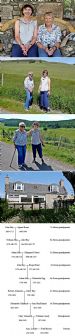

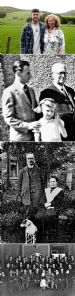

I am hoping to one day visit Glenbuchat and breathe the air my ancestors breathed, and see the same hills, and hear the same streams. Are there any Davidson descendants still in the area?
My family tree is on Ancestry if anyone is interested.