The Glenbuchat Image Library
No: 2397 Contributor: Ken Cruickshank Year: 2021
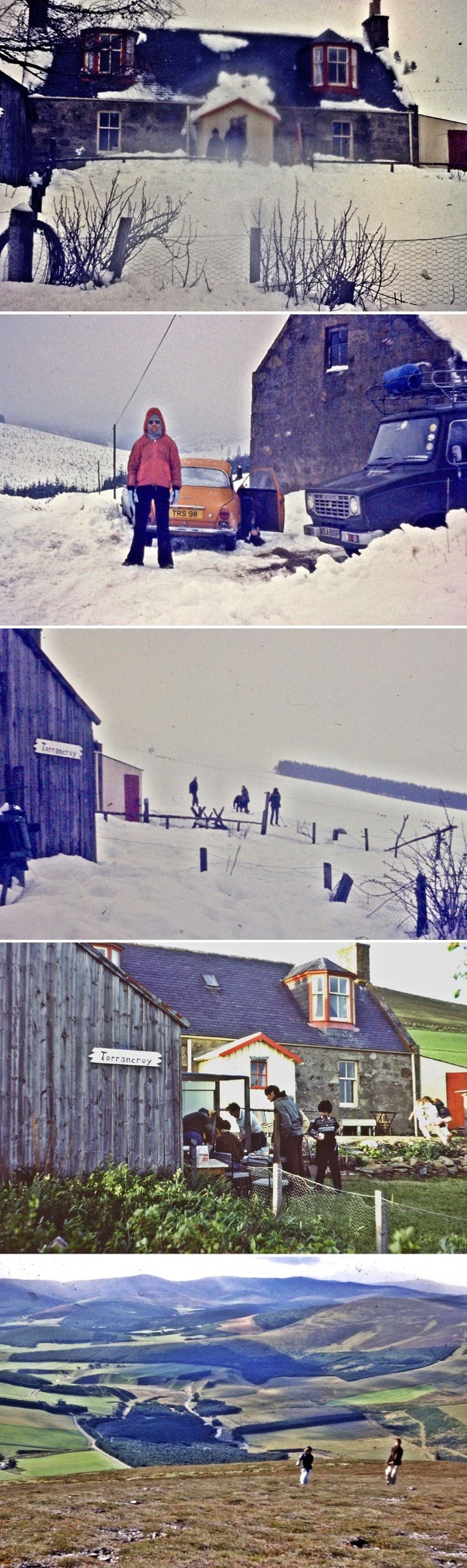
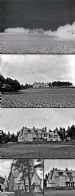
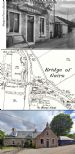
110 Torrancroy in the 1970's


Torrancroy
Image 1. Winter storm Torrancroy.
Image 2. Dressed for the conditions.
Image 3. Attempting to ski.
Image 4. Trying to get the BBQ going.
Image 5. A breezy day climbing Lady Lea Hill behind Torrancroy
I am grateful to Ken Cruickshank for these pictures of Torrancroy in the 1970’s
In the late 1970 s the Hillwalking Club of The North of Scotland College of Agriculture rented Torrancroy farmhouse, which was standing empty at the time, from the estate. It was used as an accommodation centre, both in winter and summer, for staff and their families, and international students studying agriculture at the College and at Aberdeen University to gain access to the area and get to know Strathdon. Many a foreign student's first introduction to rural Scotland in the late 1970 s and early 1980 s was via Torrancroy.
Other facts about Torrancroy from the Newspapers
MARRIAGES
FRASER-DON
At Torrancroy, Strathdon, on 7th October, 1939, by the Rev. G. W. Michie, Ernest, second son of Mr and Mrs Fraser, Kirkton. Glenbuchat, Joan, fourth daughter of Mr and Mrs Don. Torrancroy, Strathdon
Aberdeen Press and Journal - Thursday 12 October 1939
DAVIDSON DON. At Torrancroy, Strathdon, on 18th June, 1941. by the Rev. G. W. Michie. Pte. John Ingram, only son of Mr and Mrs Andrew Davidson, Muir of Greystone. Alford, to Isabella, third daughter of Mr and Mrs John Don. Torrancroy. Strathdon.
Aberdeen Weekly Journal - Thursday 03 July 1941
NESS—DON. —At Torrancroy, Strathdon, on 3rd June, 1939, by the Rev. George W. Michie, James McCombie, grandson of Mr and Mrs Ness, Monell. Glenkindie, to Helen Christina, eldest daughter of and Mrs John Don, Torrancroy, Strathdon.
Aberdeen Weekly Journal - Thursday 08 June 1939
DON —At Aboyne Hospital, September 5. 1969, Elizabeth Stewart. beloved wife of the late John Don. Torrancroy. Strathdon. service at Torrancroy on Monday. September 8, at. 30 p.m., thereafter to Strathdon Churchyard. friends respectfully invited
Aberdeen Press and Journal - Monday 08 September 1969
RECOLLECTIONS ON TORRANCROY IN THE 1970's & 80's
(Grid Ref. NJ 337159)
By Ian Murray
Dr Ian Murray worked at the North of Scotland College of Agriculture in the 1970’s and 80’s
I must have been about age 10 when I first went to Strathdon back in the mid 1950s. As a "toon-loon" Glenbuchat was a welcome adventure as my uncle, Archie Strachan, then rented a cottage at which we planned a long weekend stay. The first thing I noticed was the big sky at night where, on a clear dark night, you could see millions of stars in a cloudless sky due to no light pollution, unlike in the city. Even the milky way was spectacularly visible. That particular weekend was memorable because the Shand family who farmed nearby had just acquired mains electricity for the very first time! It was cause for a real celebration when the switch went on at dusk and all was bathed in light and all the faces of friends and family lit up with joy and everyone cheered. No more paraffin tilly lamps and gas mantles. Now a fridge-freezer became a reality. Town dwellers like me thought milk, butter, cheese and eggs came from the Co-op but in reality, food was made by farmers like the Shand’s.
Little did I know that 20 years on Strathdon would again feature in our young family's lives during the 1970's & 1980's when a cottage called "TORRANCROY" (a rocky knoll) in the adjacent Glen Nochty would come on the scene. This is the story of how this came about and opened leisure opportunities for staff, students and their families from Aberdeen School of Agriculture; thanks to an initiative of Dr Alison Innes, Mary Fraser and others. The profits from the senior common room provided pump-priming funds to pay the initial rental from Candacraig estate.
A log book to record usage of Torrancroy was diligently kept for some years but, at some point it was lost and never turned up again. A real sad loss. Torrancroy had been the home of Jock Don and his family - a very appropriate name for a family rooted in Donside of course. My mother, as a schoolgirl in Aberdeen in the 1920's, had spent some weeks in nearby Invernettie on her summer holidays having been taken there by her father, a journeyman joiner who would fix doors, gates and fences for the farmer so as to give the Strachan kids a break from city life. (Employer- paid holidays are a recent phenomenon!).
Glen Nochty had been renowned for smuggling of illicit whisky over the ladder hills from Glenlivet and Speyside. Nochty is a much narrower starker glen than Glenbuchat. It had suffered greater depopulation and displacement from farming to forestry such that the locals complained that " there's sae muckle trees we canna get looket oot". The U -shaped valleys scoured out by the glaciers remain in evidence as do the V-shaped valleys cut by their meltwater.
The Norman Motte (NJ353129) located at the confluence of the water of Nochty with the river Don had been constructed perhaps 1000 years ago from dumped glacial moraine to construct a fort surrounded by a palisade and moat, sometime supplied with water from a small stream with the imaginative name: river Bardock. Rustling of horses or cattle being perennial through history.
Farther up the Don at Cock Bridge it is surprising to see how the Don is such a small river within an extremely wide basin; in sharp contrast with its sister river Dee. If you follow the Don west from Cock Bridge to Inchrory you discover that the Don disappears altogether - its headwaters having been captured eons ago by the river Avon which shows a sharp turn north by a 90 degree "elbow of capture" running north into the river Spey. This explains why the Don is deprived of water while the Spey is powerful and fast flowing. Impounded by a huge glacier for eons, the Don lost its headwaters to the Avon which was then cutting through soft limestone. The glens have been sculpted by ice and water with the resulting sand, gravel and boulder clay spoilage being deposited as moraines; hillocks known as kaimes and drumlins.
People came and went to and from Torrancroy all year round. There were work weekends, BBQs and social events and walks to the top of Ladylea hill behind the cottage and over the Green hill to the west to the serpentine outcrops of the Craigs of Moniewhitt. Outcrops of limestone appear in places as evidenced by lush green grass replacing heather. Nearby are abandoned remains of lime kilns used to burn limestone to quick lime which could be used for building or to neutralise acid soil to improve fertility. Old people would speak of " so many reekin' lums in Nochty" at one time but depopulation has meant that much effort of generations of men with horses de-stoning and clearing land for farming food may never do so again. Rummaging through the entangled vegetation you can often come across a pile of stones, all that remains of a black house, with the rhubarb strangely still growing 100 years on, as is the gean tree still producing wild cherries. Ruins such as Auchernach's walled garden and Duff's Defiance, (where a man of that name defied the excisemen coming to seize his contraband spirit) await your exploration as well as spectacular wildlife like the Golden Eagle soaring atop Rhinstock hill. Year-round Glen Nochty rewards us with wonderful surprises, breath-taking sunsets and wilderness solitude. At the right time of year, you may be lucky enough to see the Arora Borealis.
Encounters with wildlife are a rewarding bonus when walking the glen. Finding a new-born roe deer kid in the grass or a pigmy shrew patrolling the kitchen while grandma stands upon a chair petrified! On one or two occasions, enjoying the peace and tranquility of the glen, I have been bowled over by a sudden invasion of a trio of fighter jets bursting out of the sky at near supersonic speed heading north towards RAF Lossiemouth. Startling to say the least! Also, on one occasion, a low flying enormous Lancaster bomber was travelling slowly north and seemed to be clipping the tree tops perhaps practicing to evade radar? For city children such experiences have a profound effect on their understanding of the need for responsible husbandry of the environment, the rivers, lochs, forests and mountains. Respect for wild places and their flora and fauna offers young people a foundation for their education and development - a learning opportunity not to be missed.
It is strange that when some extraordinary, shocking event is announced, when you hear of it, you stop in your tracks in disbelief. You will forever recall exactly where you were, with whom and what you were doing. At Torrancroy on the 16th August 1977 it was late at night while we were listening to radio Luxemburg when they interrupted the broadcast with a newsflash: "The King of Rock n' Roll, Elvis Aaron Presley is dead aged 42". Such events become engraved in your memory. We look back fondly on our visits to Glen Nochty and the kind people who we knew so well in that beautiful place.
However, times change, life moves on, children grow up and circumstances overtake us. Eventually the lease of Torrancroy was over. Some years later we were at the Lonach Gathering and took the opportunity to visit Torrancroy with our now grown-up children. Sadly, the house had had its porch torn off and lying upturned on the green. The ground floor had fallen in and the boards were now ankle deep in water. It was a ruin. Our three teenage children were shocked and saddened at the sight; they wanted to "do something". I had to explain that we had no rights in this respect. After the end of the lease the cottage returned to the estate. Fortunately, if you return today, you will be pleased to find that the site is now restored with a splendid new building now in its place.
Picture added on 23 June 2021 at 18:37
This picture is in the following groups
buildings
buildings
Torrancroy was where i and most of my cousins were born John and Elizabeth Don were my grandparents
Added by Jean DiMaio on 14 July 2021
buildings


Corrected . Ed