The Glenbuchat Image Library
No: 2387 Contributor: Laurence Tough Year: 1959
105 Glenbuchat Days by Laurence Tough


Many thanks to Laurence Tough for the following article about life in Glenbucket in the 1960’s before electricity reached the top of the glen. Electricity finally came in the mid 1970’s and only reached parts of the Deuchry in the 1990's
Click for other links to Crofts.
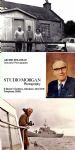
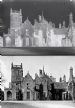
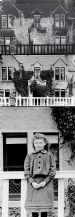
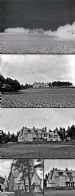
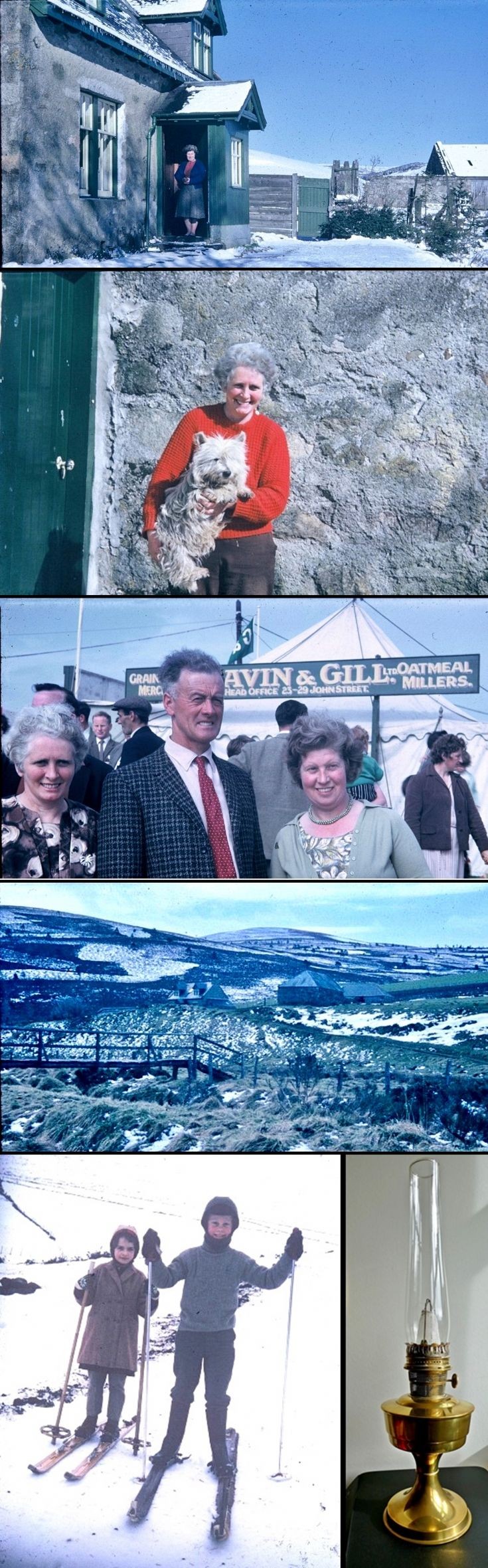
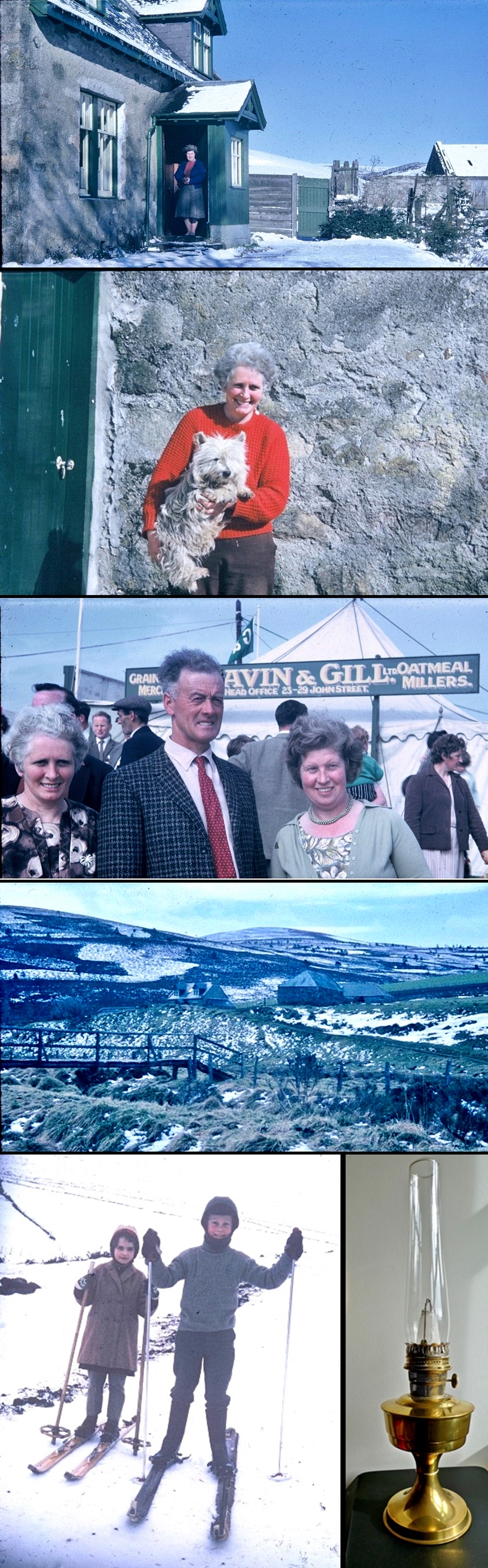
The photos above show
Laurence’s mother at Crofts
Nan Sandison at Netherton
A well-scrubbed Tom with mum and Nan at the Alford Show circa 1966
Crofts in winter
Laurence’s brother Gordon aged about 10 with Geordie Oswald’s daughter Mary on very traditional skis.
The Aladdin Lamp which sits in my study and reminds me of Glenbuchat
GLENBUCHAT DAYS by Laurence Tough
In 1959 my father Alfred Tough came to hear that holiday houses were available for let in Glenbuchat, a relatively remote glen on Donside, near Strathdon, about 40 miles west of Aberdeen.
We went by appointment to Glenbuchat to see a house called “The Crofts”. It was occupied full time by a retired couple George and Florence Innes who were moving to Newburgh. They kept us waiting a long time because Mr. Innes was completing a bath.
Having seen the house it was decided (which probably means father decided) that we should apply for it. This involved a suitability interview with “the Laird”, Colonel J Barclay Milne in the Estate Office at 10 Albert Street and I was duly paraded in my best (actually my only) jacket with a smart shirt and tie. Fortunately, we were deemed suitable and, in the summer, we were able to begin moving in, having the benefit of father’s “new” car, a 1939 Morris 12 (think Foyles War, the Wolseley was a badge engineered Morris).
My mums rural background and knowledge of the rigours of country life, (she was a country girl brought up in Sauchen and Kemnay), may partially explain why father was more enthusiastic than her but as in so many things she went along with it and she did enjoy Glenbuchat and especially social contacts in the glen with Nan Sandison and others.
The house was in typical turn of the century country style, a sitting room and bedroom to the front downstairs with a small scullery (kitchen) at the rear and a bathroom. Upstairs there was a storage area on the landing and a bedroom on each side with dormer windows giving magnificent views over Netherton farm and beyond. The water was heated by a range incorporating the fireplace and an oven. There was a calor gas cooker in the kitchen. But there was no electricity. The glen had not been connected to the grid although some farms had generators. The lack of electricity created a number of limitations. No domestic appliances, TV, radio, iron, fridge or washing machine. There was also no bin collection. The lack of electric lighting was the biggest problem. We did have an Aladdin lamp in the lounge which gave a surprising amount of light but otherwise it was torches or candles. Mum had an iron with two detachable soles which could be heated in turn on the cooker. Calor gas fridges were available but we didn’t have one. There was no phone, and mobiles hadn’t been invented.
As to furnishings John Milne auctioneers were the source, and the house was actually nicely furnished. The prize item was a flame mahogany sideboard with a beautiful mirrored over-mantle which reflected the light from the Aladdin. It cost 5/- (25p).
Days at Glenbuchat were spent “at leisure”. That meant reading, gardening, hillwalking, and cycling if I had ridden my bike out, which I quite often did. Father took the view that the Crofts should be a retreat from the world so we didn’t have a radio either. However quite soon after we started going to Glenbuchat we were invited across to Netherton the farm of Tom and Nan Sandison and their daughter Rita (Rita Moir) who was assistant Matron at Sillerton House which housed Robert Gordons School boarders.
The Sandisons became friends and I spent many hours helping Tom on the farm. I say “helping” but in the early days I doubt if I was much help at all but hopefully, I did contribute later when I was older and benefited from Tom’s training. Toms form of communication probably borrowed from working sheepdogs i.e. it was loud and direct.
By the time I was fourteen I could drive the tractor and quite soon after that his A35 countryman van as well. Tom had a grey Fergie at first but then got a 35X which I thought was amazing.
Netherton was a mixed farm of about 150 acres which in the 1960s was considered big enough to be sustainable but nowadays it would not be and the holding was amalgamated with another, Upperton I think when the Sandisons retired. Tom had sheep, cows, a goat sometimes, and lots of hens. He bred cairn terriers. He grew oats, barley, turnips and potatoes and produced silage as well as baling hay. The hay was stored in traditional stacks but later bales which were baled by a contractor. He had a kitchen garden and a rifle. He also made wine from birch sap and brewed beer. They had their own threshing mill in the steading So there was a high level of self-sufficiency.
There were many funny things which happened at the Crofts. On one winter occasion leaving Gordon and I at home Mum and Dad went to the Crofts to check if the pipes were frozen. This involved taking the bus to the end of the main road then walking four miles to the house. Unfortunately, the Crofts was completely snowed up and the roads barely passible. But it was the night of the Burns Supper at the village hall so the Toughs and the Sandisons travelled to the supper on the back of the tractor the men consuming much whisky before returning to Netherton for the night.
On another occasion Tom bet me a shilling I could ride my bike across the burn at the bottom of the Crofts hill. I decided that this was achievable by racing down the hill so that the momentum would carry me across the boulder strewn bed of the burn. This was not successful but it did cause Tom to roar with laughter and he gave me the shilling for entertainment value.
It was at Glenbuchat that I drank my first beer albeit heavily diluted as a shandy. It was customary for local farmers to come together to help each other when needed such as a sheep dipping or clipping. On these occasions sandwiches beer and lemonade were provided. Working sheep is thirsty work.
In my later teenage years and beyond Country dances were also a lot of fun. The farm lads from round about drove in their dad’s cars sometimes a distance to Ballater or Aboyne and let me join them. All very well but they were in the main too young to have driving licences. One of these particular companions was the late Bill Ross from Balllochdhuie who did have a driving licence and a car with distinctive headlights one white and one yellow in French style.
Among other interesting people at Glenbuchat were Geordie Oswald the gamekeeper and his wife Myra. They lived at Peatfold. In 1968 he went to a new job at Loch Ericht and Tom and I spent an interesting few day there before I went to London for a holiday job.
In Autumn 1970 Tom and Nan gave up farming and I attended the roup or “displenish” sale when the stock, vehicles and implements were sold. Tom described this as “the laist hairst” (the last harvest) because the capital was needed to help fund retirement. Some say that In farming circles farmers pay more if they like the person and Tom’s sale was very good. There was a big party to celebrate.
We kept on the Crofts for a little while after the Sandisons left and my friend Denis Yule and I spent a memorable week there in 1970 living mainly on Fray Bentos Pies and McEwans Export. However, for me long holidays were coming to an end as I began my solicitor training, and for Dad he was increasingly busy travelling to rehearsals for the Edinburgh Festival so he ended the lease and thus our Glenbuchat days. However, it was not the end of our friendship with the Sandisons. Tom and Nan bought a house called the Birches at Granton on Spey and operated it as a Boarding House and Tom worked part time in Granton Mart applying his skills as a stockman.
After about 10 years in Granton Tom and Nan retired to Alford, the area which they originally came from.
In both these houses Sandra and I and later Jennifer visited and kept in touch. Tom died in 1999 aged 90 . He was still driving on the day he died. Nan died in 2008 aged 94.
I remember the Glen and its inhabitants with great fondness and any trip to the West usually includes a detour through the Glen and past the Crofts.
 View Large Version
Picture added on 17 March 2021 at 12:53
This picture is in the following groups
buildings
buildings
I spoke to Tom Sandison once at his home in Alford. Was he one of the first farmers in the Strathdon area to introduce the new breed of continental cattle - Charolais I think, in the late 1960 s?.
Anonymous comment added on 22 March 2021
I am the Rita Sandison (Moir) and Laurence has got it totally right! My son now owns THAT sideboard!
Added by Rita Moir on 09 February 2025
buildings