The Glenbuchat Image Library
No: 2581 Contributor: No Contributor Year: 1807
36 Veer Rajinder Wadeer Rajah of Coorg


Veer Rajinder Wadeer Rajah of Coorg
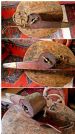
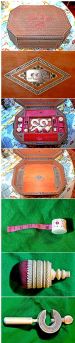
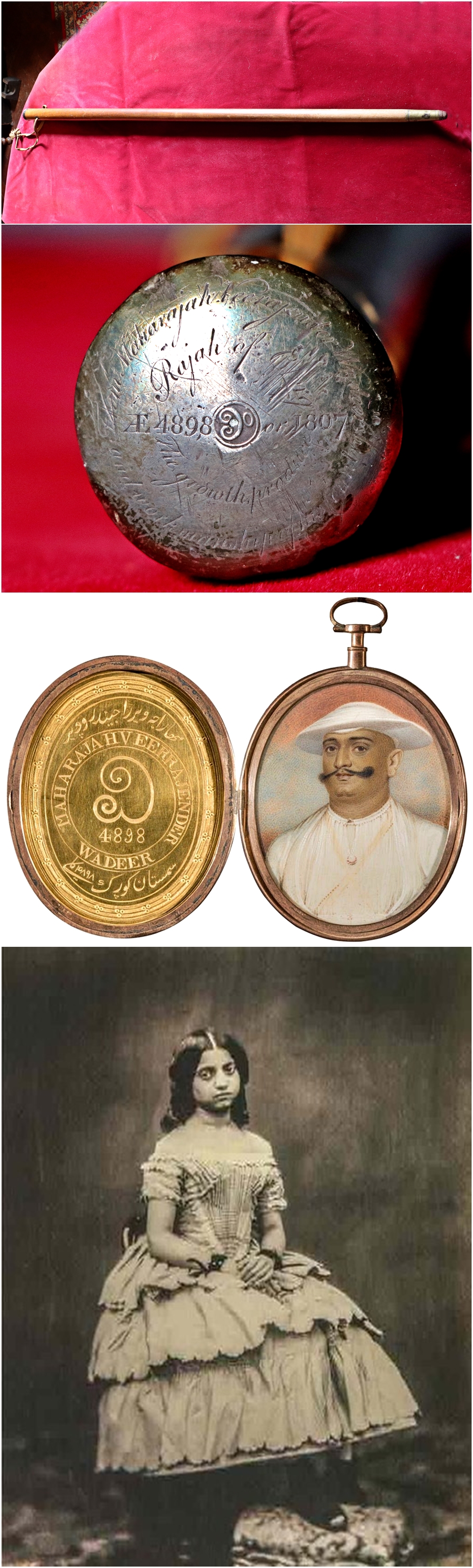
The pictures above show:
1 A walking cane presented to Sir Charles Forbes
2 The silver top of the cane with inscription of the donor.
3 Locket with picture and monogram of Maharaja Veer Rajinder Wadeer Rajah of Coorg
4 Picture of Princess Victoria Gouramma, grandniece of the Maharaja.
If a larger view required click on the ‘view large version’ link at the bottom of the page.
Click to see the album of Treasures of Castle Newe
The walking cane pictured above has a silver end with some inscribed writing. It would appear to have been given in 1807 by the Maharaja Veer Rajinder Wadeer Rajah of Coorg presumably to Sir Charles Forbes the first baronet of Newe. His uncle, John Forbes (Bombay Jock) had left India in 1796. There is record of the Maharaja having dealings with Forbes & Co. of Bombay.
The inscription reads:
From Maharaja Veer Rajinder Wadeer
Rajah Of Coorg
AE 4898 or 1807
The growth, produce and workmanship of his country.
See below the significance of the number 4898
Kodagu district (also known by its former name Coorg) is an administrative district in the Karnataka state of India. Before 1956, it was an administratively separate Coorg State, at which point it was merged into an enlarged Mysore State,Kodagu is located on the eastern slopes of the Western Ghats. It has a geographical area of 4,102 km2 (1,584 sq mi).
Maharaja Veer Rajinder Wadeer had a very interesting life and played a pivotal role in helping the East India Company Army to defeat the Maharaja’s enemy, Tipu Sultan, the king of Mysore
Dodda Vira Rajendra,
From Wikipedia,
Dodda Vira Rajendra
Raja of Coorg
Reign 1780 - 1809
Burial Mercara (Madikeri)
Predecessor Linga Raja – I
Successor Linga Raja - II
Religion Hinduism
Dodda Vira Rajendra was the ruler of the Kingdom of Coorg from 1780 to 1809. He is considered a hero of Coorg history for having freed the kingdom from the occupation of Tipu Sultan, the king of Mysore. He later aided the British in their fight against Tipu Sultan
Early life and exile
In 1780, Linga Raja, his father and ruler of the Coorg Kingdom died while Dodda Vira Rajendra was still young. Hyder Ali, the king of Mysore saw this as an opportunity and took possession of the Coorg Kingdom until, as he said "the princes (Dodda Vira Rajendra and his brother) would come of age". In September 1782, the princes were deported to Garuru. Enraged at the deportation of their princes, the Coorgs revolted and proclaimed independence. Soon after in December 1782, Hyder Ali died due to a cancerous growth in his back and his son Tipu became the King. Tipu dispatched the Coorg royal family to Periyapatna and proceeded to annex Coorg and other areas. In December 1788, Dodda Vira Rajendra escaped from Periyapatna and by 1790 had regained power in Coorg.
Battles against the Kingdom of Mysore
Dodda Vira Rajendra ousted the occupying army of Mysore from Bisli Ghat to Manantody and led plundering expeditions into the territories of the Mysore Kingdom. In retaliation, Tipu Sultan sent armies against him, led by Tipu Sultan's Generals Golam Ali and Buran-ud-Din, but were defeated by Dodda Vira Rajendra. In June 1789, he sacked and burnt the fort of Kushalanagar and in August he destroyed the fort of Beppunad. This was followed by the capture of the fort of Bhagamandala. Thereafter, he captured Amara Sulya.
Noticing the successes of Dodda Vira Rajendra, the Government of the British East India Company offered him an alliance against Tipu Sultan in October 1790. Faced with a powerful opponent in the Kingdom of Mysore, Dodda Vira Rajendra accepted the offer and allied with the British.
Alarmed, Tipu dispatched another army led by General Khadar Khan, which was also defeated. Thereafter, the fort of Mercara capitulated to Dodda Vira Rajendra without a fight.
Dodda Vira Rajendra allowed the British Bombay Army to pass through Coorg, on its way to Srirangapatna, Tipu Sultan's capital. He also aided the British in their fight against Tipu Sultan, until the latter's death on 4 May 1799.
Death
Dodda Vira Rajendra died in 1809. Two years after the gift of the cane.
His tomb is located in Mercara (Madikeri). He is deified and his tomb is worshipped to this day
Princess Gauramma (Greatniece of Maharaja Veer Rajinder Wadeer)
In 1852, Veera Raja (Veera Ragendra’s nephew) got permission from Lord Dalhousie to proceed to England with his favourite daughter Gauramma who was 10 years old for her education. Veera Raja wanted her to adopt Christian faith. In 1852, Queen Victoria who had a liking for Gauramma got her baptized by the Arch Bishop of Canterbury and gave the name Victoria. She eventually married an English Captain and had a daughter. Her married life was an unhappy one and she died in 1864.Vira Raja died in 1859 under mysterious circumstances while on way to the bank to operate his safe deposit lockers.
Princess Gouramma (1841-64), was the daughter of Chikka Virarajendra, often spelled "Veer Rajunder Wadeer" in the British press, the last ruler of the Kodagu (Coorg) kingdom of Southern India. After her father's deposition from the throne, the Princess was brought to London and baptised in the Chapel at Buckingham Palace on 1 July 1852. She was given the name 'Victoria', with Queen Victoria as her Sponsor. She had been considered a suitable bride for the Maharaja Duleep Singh whose portrait is also in the Royal Collection but he declined to marry her, as he wanted to marry an English bride. In 1860 she married Lt. Colonel John Campbell. Queen Victoria also commissioned a sculptural bust of the Princess from Baron Carlo Marochetti
The Raja of Coorg had lost his throne in 1834 A.D. when the British decided that enough was enough of his misrule as some sources point out. The Raja had valiantly withstood the British offense on his palace and even pretended nothing had happened as he left his kingdom for the last time, loyal subjects lining the streets in a triumphant farewell. He decided to stay in Benares and the British allowed him a princely pension of 6,000 Pounds per annum. Of course, Coorg would generate many times more in revenue. It was in Banaras that Princess Gangamma was born around 1842 and her elder sister Princess Gouramma was born a year earlier. They were born from different mothers as the old Raja had not lost his virile old ways.
Now let us look at the fortunes of the elder sister. She was a beauty and the favourite of the old Raja, "a pigeon among crows" he would extol as she was of a very fair complexion. Raja Veer Rajendra had now taken to the ways of the British enamoured by their more civilized ways in the eyes of the rulers and ex-rulers of India. Dress codes started changing and so did eating habits. Being Europeanised was all the rage in the high society of India. The ex-Raja of Coorg went one better: he wanted to visit England and to convert his favourite daughter Princess Gouramma to Christianity. He felt he had not been dealt a fair hand by the East India Company as compensation for his ouster and he wished to present his case directly to Queen Victoria. He left for England in 1852 A.D.
What happened in England was stuff of fairy tales as the story goes that Queen Victoria became fond of the beautiful Princess Gouramma and she had her baptized by the Archbishop of Canterbury in her private chapel at Buckingham Palace and gave her a new name: Princess Victoria Gouramma. There are many books on her life. The gloss faded and she was an unhappy princess. She married a British officer, gave birth to a son and died of TB very early at the age of twenty-three! In a quiet corner of the nineteenth century Brompton Cemetery in London lies the grave of the princess dating back to 1864 A.D. Her descendants are today living in Australia.
Number AE 4898
The number 4898 and the prefix AE was rather a mystery. It obviously seems to connect with the date 1807. Research on the internet seemed to draw a blank until I came upon the following:
WORKS OF SIR WILLIAM JONES
CONTAINING THE WHOLE OF THE ASIATICK RESEARCHES
CHRONOLOGICAL TABLE OF ANCIENT ÆRAS
& REMARKS ON ANCIENT HINDU ERAS AND DATES
1801
The dating of old Mughal manuscripts seems to have a number of different forms based on ancient astronomical and other beliefs.
In the one above, AE refers to one such system called Astronomic Era i.e the prefix AE
It also states that the current year is current year 4898. This may refer to 1801 when the article was published but this does not fit with the dates on the Cane i.e. 1807.
The following is an explanation of one of the tables which I do not pretend to understand. Perhaps a Hindu Scholar may be able to enlighten us.
The Calpa is an anomalistic period at the end of which the Hindu astronomers that the places of the planets nodes and apsides will be precisely the fame as the beginning of it and the commencement of it was when the sun moon all the planets nodes and apsides were in a line of conjunction in the beginning of Aries or 1955 884,897 years ago therefore fix Manwantaras 23 Maha yugs of the seventh Manwantara and as far as the 220897th year of the Cali yug of the twenty fourth Maha yug are now (AD 1796) expired of the Calpa The ancient astronomers most probably for the fake of convenience made the present Cali yug of the Hindus of which there are now 4897 years expired to commence when just the first half or 216000 years were elapsed of the above men Cali yug of the twenty fourth Maha yug and we are now only in the year of the second half of that period I shall therefore by way of distinction call the present Cali yug the Astronomic Æra
I have placed the beginning of the astronomic æra of the Cali yug of which 4897 years were expired in April last in the 906th year of the world at which time 905 years were elapsed of the Satya yug of the Poets reckoning from its commencement at the creation.
 View Large Version
Picture added on 09 April 2024 at 17:20
This picture is in the following groups
castle
castle
castle